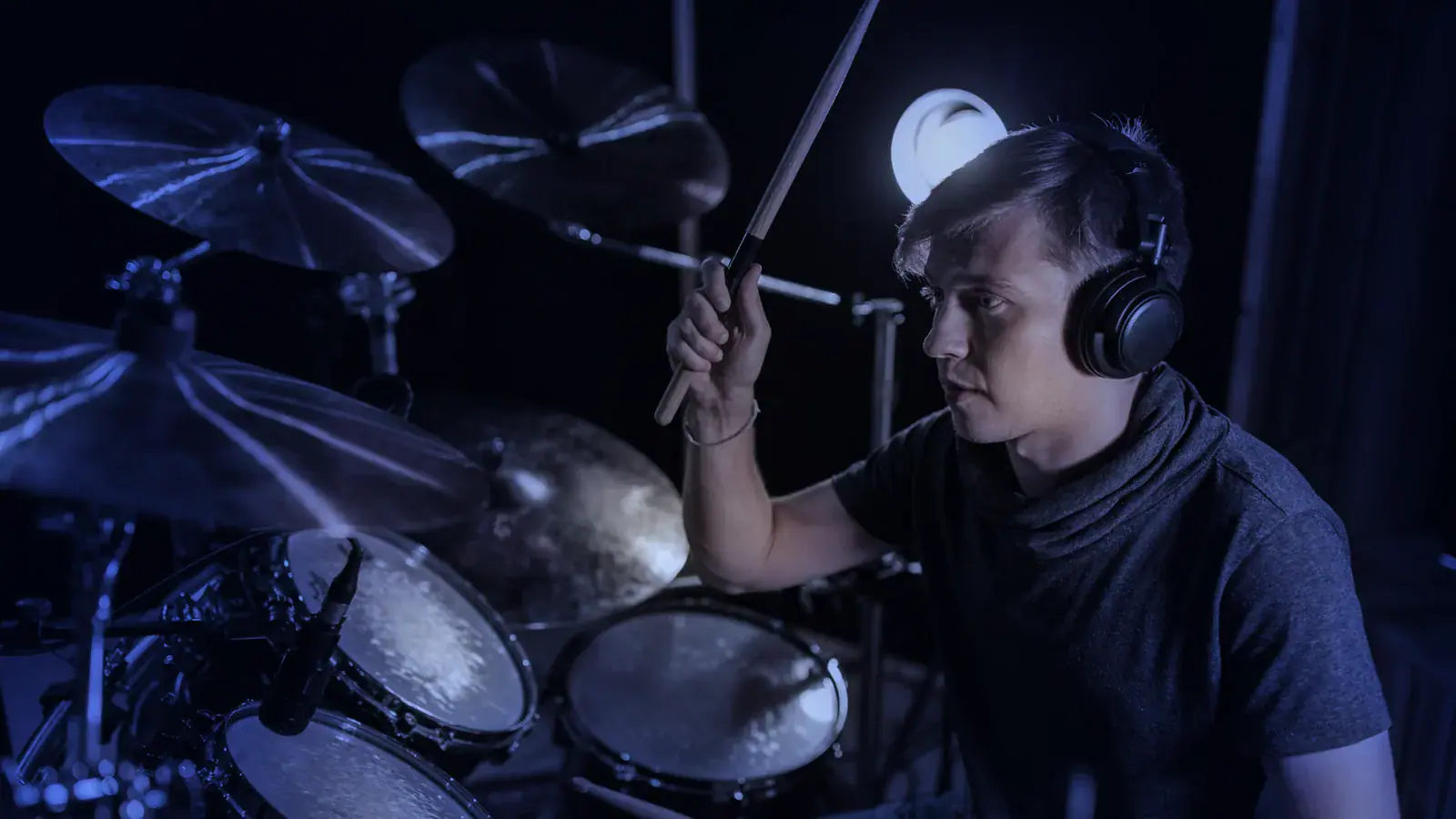

From the Music Coach Magazine archive
Somewhere along the way, someone told you that you can’t sing. Maybe it was a sibling. Maybe it was you, in the car, with the windows up. Good news: a voice teacher with twenty years in the room says the label probably doesn’t fit.
Back when Derek Berg published Music Coach Magazine, a magazine he ran for music coaches, the magazine interviewed Stephen Childs, a voice teacher and the founder of VirtualVoiceLessons.net. The interview was meant for other teachers. One exchange in it, though, belongs on the fridge of every nervous singer.
The shortest answer in the whole magazine
The magazine asked him straight out: “Do you think there’s such a thing as a tone-deaf person?”
His full answer: “No.”
That’s it. No hedging, no asterisk. Then he explained what is usually going on when someone sings off pitch.
When someone comes in and they’re supposedly tone deaf, they’re guessing at the note.
Stephen Childs
Your mind’s ear already knows the note
Guessing is a skill problem, not a talent verdict. Childs pointed to something he called your mind’s ear, and he had a simple test for it: “Your mind has this ability to remember pitch. If, for instance, I go up a major scale and I stop before the eighth note, every student can sing the last note. The most tone deaf, supposedly tone deaf, person, will hit that eighth note, because they hear it in their mind.”
Try it yourself. Hum do-re-mi-fa-sol-la-ti and stop. Your brain is practically shouting the last note at you. That’s your mind’s ear, and it has been working the whole time.

Singing is learned by feel
Piano players can look at the keys. Guitar players can look at the frets. Singers can’t see a thing, which is why voice lessons feel a little different. Childs sees that as a plus: “Actually, singing has an advantage over other instruments because a singer is the instrument and the performer at the same moment.”
He told his students that “voice teachers are teachers of feelings.” You try something, it clicks, and the job is to notice what that felt like. In his words: “There’s a feeling to allowing my larynx to float upward when I’m reaching for a high note.” When a student nails it, his instruction is short: “Remember that feeling.”
Less effort, not more
Nervous singers tend to push. Childs pointed the other way. He said he told all his students that “the voice is already tuned to sound great. Everybody sounds great.” The cues voice teachers give, he noted, are things like “Relax. Let go. Release.” Not “flex,” not “constrict.”
Which is great news for anyone who has been trying to sing by squeezing harder. You can stop. Your neck will thank you.
Ask why
One more thing Childs cared about: knowing the reason behind every exercise. Scales and warm-ups aren’t random. “There’s a reason why we do these things, and if the student knows, they’ll get better. So to be a teacher, you have to explain.” If you’re ever unsure why you’re doing something in a lesson, ask. A good Instructor will be happy you did.
At CHMA: your first lesson is free (one per family or individual). If you sing and want to write and record your own songs too, take a look at Music Creation Academy for Singers. Questions first? Text us at 630-986-8742.
For the nervous singer
- Retire the tone-deaf label. Off pitch usually means guessing.
- Trust your mind’s ear. It already hears the note.
- Learn by feel, and notice what right feels like
- Relax and release instead of pushing
- Ask why an exercise matters
Your voice has been waiting patiently for you to stop insulting it. Your first lesson at CHMA is free (one per family or individual), so come find out what it can do.